Monday, March 17, 2014

Day 2: Occupational Exploration part 2

Welcome back everyone! We are now headed off to visit another dear friend of mine. While we are en-rout to his home, I would like to give you a little insight on the Upper and Lower middle classes of society.
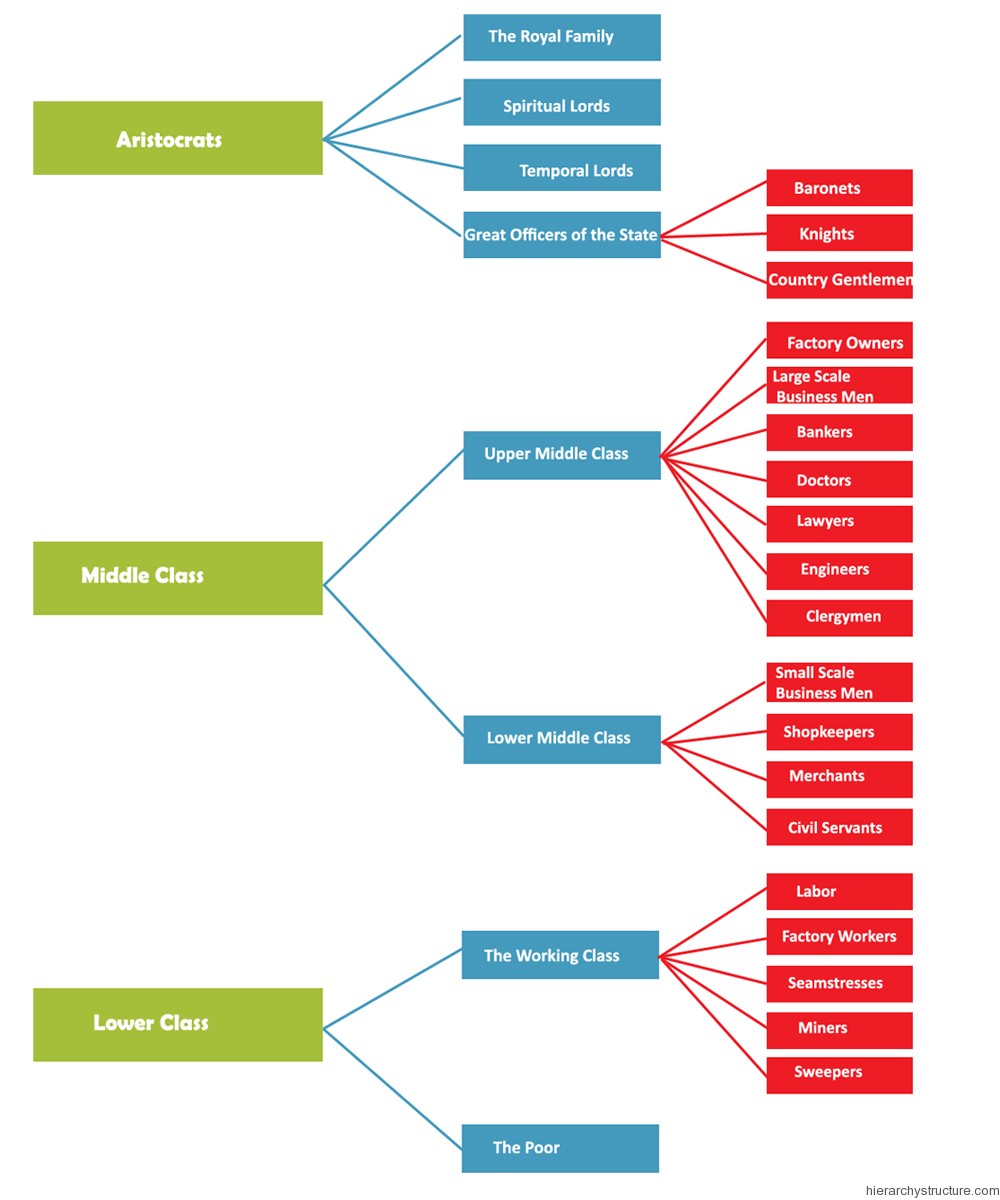
These two classes probably have the broadest spectrum of incomes because these two classes have the broadest range of occupations. Most of the middle class occupations involve little to no manual labor and provide a yearly income of anywhere from a banker's earnings 1,000 pounds or more per year to a small shop keeper making 50 pounds or less per years. (info based on http://www.census-helper.co.uk/victorian-life/). Doctors, Clergymen, Bankers, and Factory Owners were just a few of the upper middle class careers and then shop keepers, merchants, and others such people comprised the lower middle class. For today though we'll mostly be focusing on the lower middle class since my friend William Oliver is an an owner of a small clothing shop in the center of London and since we have just arrived at his estate I will let him tell you the rest...
 Hello! My name is William Oliver and my wife and I own a small clothing store in the center of busy London. Since my wife is a seamstress we not only sell materials and supplies for making clothes but sell finished gowns and coats, while I am skilled with shoe making and can offer boots and leather hats at our store in addition to the raw materials. We have two young children, Thomas and Edward, and since we only have enough of an income to have one servant, my wife usually stays at home with our children while I tend to the store front in town. We make just enough to place us in the lower-middle class, but some years our store only makes enough to consider us in the working class. The home we live in currently was actually my childhood home that I inherited it from my father. However I am very pleased with it and it provides us with enough space to allow my mother to live with us and watch her two grandchildren grow up.  A typical day for me involves starting my day around 5:00am. Betsy our made has already awoken and started the morning chores by then and I will go into town to begin setting up the store to open. When I return home at 8:00am, breakfast is usually ready and my wife, sons, and mother are up aswell. We usually enjoy breakfast together and even Betsy will join us even though she is a servant she is still apart of the family. After breakfast my wife gets to work finishing up dresses and gowns to put in our store front and since our boys are not old enough to go to school yet they stay home with her. I usually do a few administrative things in my office before I head back to the store to open shop at 10:00am. Most of our business is from Upper middle class and Rich folk, but we do have some working class people occasionally come into our store for a new pair of boots or some materials. Our store is open Monday through Saturday and Closed on Sundays so I may spend the day with my family. On some days when my wife needs a break from taking cares of the boys I will take them to the store with me. Other days I will stay home with the boys and my wife will go and tend to the store, but for the most part my customers will see me there. Most days I will close the store from 4:00pm till 5:00pm to go home and have tea with my family and see my sons one more time before they go to bed for the night. Then I return to the store until 8:00pm and close up shop for the night. My wife and I have a quiet supper together around 9:00pm and then go to bed shortly thereafter. On Sundays when the store is closed we will go to church in the mornings and then usually have a picnic lunch in the park with some of our friends until late afternoon. I would say our lives our busy but quiet and rarely eventful but I don't think I would change my class for any other if you ask me. 


This picture was taken from this link (http://www.jasna.org/info/bday-2011/id-dec.html)


Well! William's life is certainly different from Charlotte's, but I wouldn't say either one is a bad way of life. Now not every shop keeper is just like William so if you were curious about learning more info on shops in that era please check out this link! ( http://logicmgmt.com/1876/overview/victorian_shopping/shops.htm). I found it interesting that William said his shop, depending on how much it makes him per year, places his family in either the lower middle class to the upper working class. I find it very fascinating how that can play a part in where you are placed in the social hierarchy. I do however believe it is time to call it a day! Please journal tonight about which class, either Charlotte's or William's, you would prefer and why. I will look forward to hearing about what each of you have to say. Feel free to do more studying as well if you'd like before making a final decision too. Tomorrow we'll take a look at what a servants life looks like in both an aristocrats home and a small home like William's.
Your Friend and Loyal Guide,
   Georgiana Pemberton

Tuesday, March 4, 2014

Day 2: Occupational Exploration Part 1

Good Morning my friends,

    Now that we are quite familiar with 19th Century English society, we are going to talk about the type of occupations they would have had back in that era. Today we will be visiting many of my friends across the streets of London to discover a day in the life of each class of society, but let me first start by explaining the "ladder" of society.

     If you will observe the table below for just a moment I will explain how the social classes look

Starting with the highest class on the info-graph we have the Aristocrats, rich people who typically inherited their wealth from their family line, like the Royal Family, Knights, Country Gentlemen, bishops, and those in parliament. Aristocrats had no thought of money during their lifetime and many of them gave large amounts of money to the poor and needy. Today we'll be meeting my dear friend, Charlotte, who will give us a tour of a typical day in a rich home and give us a taste of Aristocratic life in general.

This is what a typical house may look like for the upper classes of England


Hello, my name is Charlotte Williamson and I am what you may call a gentleman's wife. We make enough per year to place us in the highest social, or aristocratic class. My husband inherited his fortune from his father and his father from his and so forth. We have three children, James, Hannah, and Mary. James, because he is the oldest and only son, will inherit the most of my husband's fortune for himself and continue the Williamson family line. My daughters on the other hand will only inherit a small portion of their father's money and will have to supplement their incomes by marrying well. In addition to James inheriting his father's fortune, he will also take the Estate we are now living in as his own after my husband and I have passed on. My daughters will marry and move to their husband's estates and raise families of their own. We have several servants, some who take care of the typical house hold duties and other who are personal servants for each member of the family. Trips into town are often, because we don't have very much to do around the house and we also don't want to be in the way of the servants as they are trying to do their work. When we are at home though, my daughters will practice their piano lessons, go out riding, painting, recite poems, and write letters to friends. My son spends many hours a day in our gardens studying plants and other living things while taking notes and drawing diagrams. I often find myself sitting in the drawing room writing letters, quilting, or simply listening to one of my daughters practice their music. My husband spends much of his time in town conducting business with his colleagues or purchasing items needed around his office. I typically do not arise early in the morning, around 8 o'clock in the am is my usually time to wake. My personal servant, Darcy, helps me dress and does my hair in the morning. Then I usually read or write until 9 o'clock and then go down for breakfast that servants have prepared. We usually have breakfast as a family and then don't typically see each other again until the evening meal. My daughters and I have tea at 4 o'clock in our personal tea garden, but my husband and son usually have their's, along with a possible alcoholic drink as well, in the library as they discuss politics or other such things which are of importance to them. Throughout the day you may find each of us in various areas of the house, but rarely in the same room together. At the evening meal we usually have little conversation, except for a review of the events of the day or looking on towards the following day, but not much is said. Occasionally we will have a guest for supper and thus more conversation is stirred but for the most part excessive talking is not considered appropriate behavior. After supper, I usually retire to my room where I will spend the remaining moments of my day reading or writing letters. Most days my schedule is thus, but at least once or twice a week we will go into town to watch a play or have supper, but for the most part I find my self living out my day in quite luxurious solitude. 
     So now that you have heard about how an aristocrat might have lived do you think you would still want to be one? I would honestly say for myself this social class seems like they live a rather plush and lonely life, but I don't want you to decide for yourself before you've had a chance to see all the social classes of this era that I am going to show you. For now though I think it is time to return to our rooms and have tea. Then this afternoon I will take you to see the upper and lower middle classes and their occupations as well as their daily life. Rest well my friends and I will see you later.

Your loyal and friendly guide,
Georgiana Pemberton

Wednesday, February 26, 2014

Day 1: English Breakfast and Tea

Good Morning My Friends,

 I trust your accommodations last night were agreeable. Without much ado, let us begin our 1st day of experiencing 19th century England. First we will partake in a traditional English breakfast.
     During Jane Austen's era you'll begin to notice that economic status of each individual played a big role in everything a person would do, from relationships all the way down to the very hour a person would rise in the morning would depend on their income! In a typical manor home, servants would be the first to rise every morning to prepare breakfast, heat water, milk cows, sweep, etc.; Gentlemen would be the next to arise in the morning and would carryout their buisness, like letter writing and town visiting; The higher up the social class the later you tended to sleep in the morning. Sometimes 1pm in the afternoon was considered morning still! Since we have lots of things to do today I have not allowed us the luxury of sleeping in that late. Now on to breakfast. The morning meal, among all social classes, was usually taken at 9am and prepared buffet style. For a middle class family tea and biscuits were commonly found at the breakfast table, but it wasn't unusual to have bacon, eggs, porridge, or even chocolate for breakfast! Imagine a society where it was socially acceptable to eat chocolate for breakfast!!! Well, the chocolate that they ate back then was probably not the sweet, sugar-laden chocolate morsels of today. It was probably a very dark chocolate that had little to no sweetener and since chocolate was hard to come by, it was probably only seen at a very rich families morning table. So today we shall be partaking in a simple breakfast of tea with biscuits and jam. Then as soon as we have finish we'll move on to the next course. If your not quite satisfied yet with breakfast you can fill up on some more "good eats" by visiting these two links( http://janeaustensworld.wordpress.com/2011/07/27/breakfast-in-the-regency-era-and-their-definition-of-morning/ and http://www.georgianindex.net/breakfast/breakfast.html), but for those of us who are full and ready to move on, let's keep going. (the others will catch up with us later)
   Once breakfast was completed the servants would typically clean up the dishes, and depending on what the dinner would be, they may have already started preparations for the evening meal. But for the family they could be found reading. walking, ridding horses, writing a letter, going into town, or carrying out business of the day. Lunch was never really a significant meal and usually consisted of a quick snack because tea would be served not too long afterwards, which in my opinion, is a much more exciting meal! So we will just skim quickly over lunch and right into tea time.
     Tea time was, and still, is a very important part of English society (which is why I want to spend most of our time on it). Tea is what makes England tick, it's always been a big part of English history. So around 4 o'clock everyday, you'll find society taking a moment to enjoy a good cup of tea. There are two kinds of tea times that can be served, either high tea or low tea. I know it doesn't sound very original but you'll see why they are named such in just a moment. Low Tea was the typical 4 o'clock tea time which was usually just tea served with a few simple dessert like items. High tea on the other hand was a much more regal event. It would usually combine afternoon tea and dinner together and it was usually only served when company was visiting. During this type of tea one would find dainty finger foods like cucumber sandwiches, small petit fours, or biscuits and jam. Both high tea and low tea, also called afternoon tea, could either be taken in the home or weather permitting in the garden. For more info on tea time you can go to these links http://whatscookingamerica.net/History/HighTeaHistory.htm. or http://www.afternoontea.co.uk/information/history-of-afternoon-tea/
or if you want to see a timeline of tea in England check out this link
http://www.foodtimeline.org/teatime.html

So you are now very well educated on 19th Century English food and drink and have enjoyed quite a few treats let us conclude today by taking a stroll in the garden and then retiring to our rooms for night. Sleep well my friends, I bid you adieu.

Your Loyal and Friendly Guide,
 Georgiana Pemberton


Friday, February 21, 2014

Welcome to the Adventure!

  Good Morning my friends, 

Welcome! My blog is about to take you on the most exciting adventure you've ever experienced, So get ready to fasten your seat belts, or bonnets in this case, for the most exciting journey to date! 

Where are we going, you may ask?

Would you be so kind as to step into my time machine.....

I am setting the date...

...1800....

now I am imputing the place....

 ....London, England.....

....and TAKE US THERE!!!!!!!

(Strange mechanical sounds then a whirring noise. Everything goes black for a few seconds and then....)

...VOILA!... 

We've arrived at our destination!.... How do I know this?......Well....

Take a moment to catch your breath. That's right breath deeply in and slowly breath out. Now I want you to look around you. I am sure you will be familiar with the trees and cobblestone streets of England thus far, but I want you to take a closer look and tell me what you don't see.
   ....Yes! That is exactly right! You see absolutely no cars, cell phones, people wearing jeans or any modern technology what-so-ever! In fact, you see buggies, women in long gowns, men in tall hats, and you hear the clip-clop of horses' hove's walking on the streets as they pass you by. Now before you get too carried away, I want you to take look at your own clothes for a moment...
  I hope you don't mind that I took the liberty of programming my machine to dress you all in period attire and I took it upon myself to collect all your phones and modern accessories before we left my laboratory just moments ago. Don't worry, when we return home everything will be returned back to your person and all will be as it was, but for now we have no use for those things so let us continue on. The other observation you will notice is that I have given you all a small purse containing all of the essentials that you will need during our journey. Go ahead and take a moment to open it up and see what is inside. It should contain the following items: 

... Gloves....

.... A Handkerchief...

....  A  Journal.... 

...... Ink and a quill pen... 

..... A letter from Me, that you will have a chance to read later....

....A Bonnet.....

......and a Pound...(which is about roughly equal to 80 US dollars in today's economy, I get this number from http://www.uwyo.edu/numimage/currency.htm by imputting 1800 to 2014 conversion) If you want to find out more about 19th Century English currency visit this link: http://www.oldbaileyonline.org/static/Coinage.jsp#coinage.

That should be all that you will need for this stretch, but I have also left room in your handbags for items that we will acquire along the way.  Let us continue on our journey.
 Before we plunge too deeply into this era we must first carefully immerse ourselves into character. I have done the exterior look by giving you clothes and items appropriate for this period, but I have left the interior of your character entirely up to you. You must leave your modern lives behind and recreate for yourselves a convincing Victorian back-round. I will of course help you along as you build your 19th century English person, but most of the choice work will be upon you. Now let us begin.

...A good first name.. most of us do not have names that were commonly used in the Jane Austen era so we must change them to be more alike. You have several choices for this.
1. You keep your name by using a variation used back in that century.(this could take some time on your part, depending on the given name you have.)
2. You can chose from a list of names I have for that period.
Use this link here: Jane Austen Period Names, I recommend this choice the most, for time's sake.
3. Or you can completely go off on your own and research a name you want to use, but it MUST be from the 19th Century English time period.

..... I'll give you a few moments while you create your first name.....

....you have one?....

....Splendid!.....

Now for a good last name...You have the same choices really for the last name as you did for the first, but I am also going to provide you a link for English surnames, the list is quite extensive: List of English Surnames. However you can also use the boys names in the link I gave you for the first names to help you decide on a last as well. 
     So, you now look like an Austen character, you are named like a Austen character, let's prove your are indeed a true Austen Character with a back-round story of your character's life. Now the most important thing in that time period was how much money you made. It was what determined your place in society. Most of Jane Austen's main characters were quite well off. Take Mr Darcy and his earnings of 10,000 per anum, which in today's currency had him making well past a millon per year. Making him a very desirable match for anyone, much less any of the Bennet sisters who had really no inheritance at all. But non-the-less the Bennet sisters were fairly well off due to their father's nothing-to-sneeze-at-income of 2,000 pounds per anum. 
   Since we are a group of young individuals going on an adventure let us come to the agreement that all of our characters are fairly well off making about 1,000 pounds a year, that's about $80,000 per year in today's currency. Now let us decide where our characters homes are located. I Georgiana Pemberton of Cambridge am from Wimpole Estate. I live there with my Uncle the Earl of Hardwicke and my dear Aunt Elizabeth, the Mistress of Wimpole. They are very kind to me and I have lived there since I was one and twenty (21 years old). 
Now you are probably wondering how I created such a fantasy. And believe it or not, much of it is not fantasy, except for the insertion of my character into history.
1.  Simply follow this link first http://www.jasna.org/info/maps.html and it will take you to all the places Jane Austen used for her books, you can choose a real place or one Jane Austen made up in one of her novels.
2. Once you have decided on a place for your character to live, simply follow this link http://www.britainsfinest.co.uk/historichouses/search_results.cfm/searchtown/Cambridge/searchclasscode/25 and type in the city you've chosen for your character to find historical homes for them to live in (This step will not work if you have chosen an imaginary location, in that case just chose a home from Jane Austen's novels. 
3. After I searched under Cambridge I found Wimpole Estate and just did a little more research to find out which resident was living there in 1800 and there you have it! A perfectly convincing back-round! 

   Congratulations! You've done a capital job of creating your character and now it is time for us to end our first day here in 19th century England. We shall have tea and retire to our bed and breakfast for the night. You may freely write about your new character on the first page of your journal so that you shan't forget who you are as we continue our travels through England. We'll reconvene at dawn, but until then good morrow to you all.

Your Loyal and Friendly Guide,
  Georgiana Pemberton